

About the project
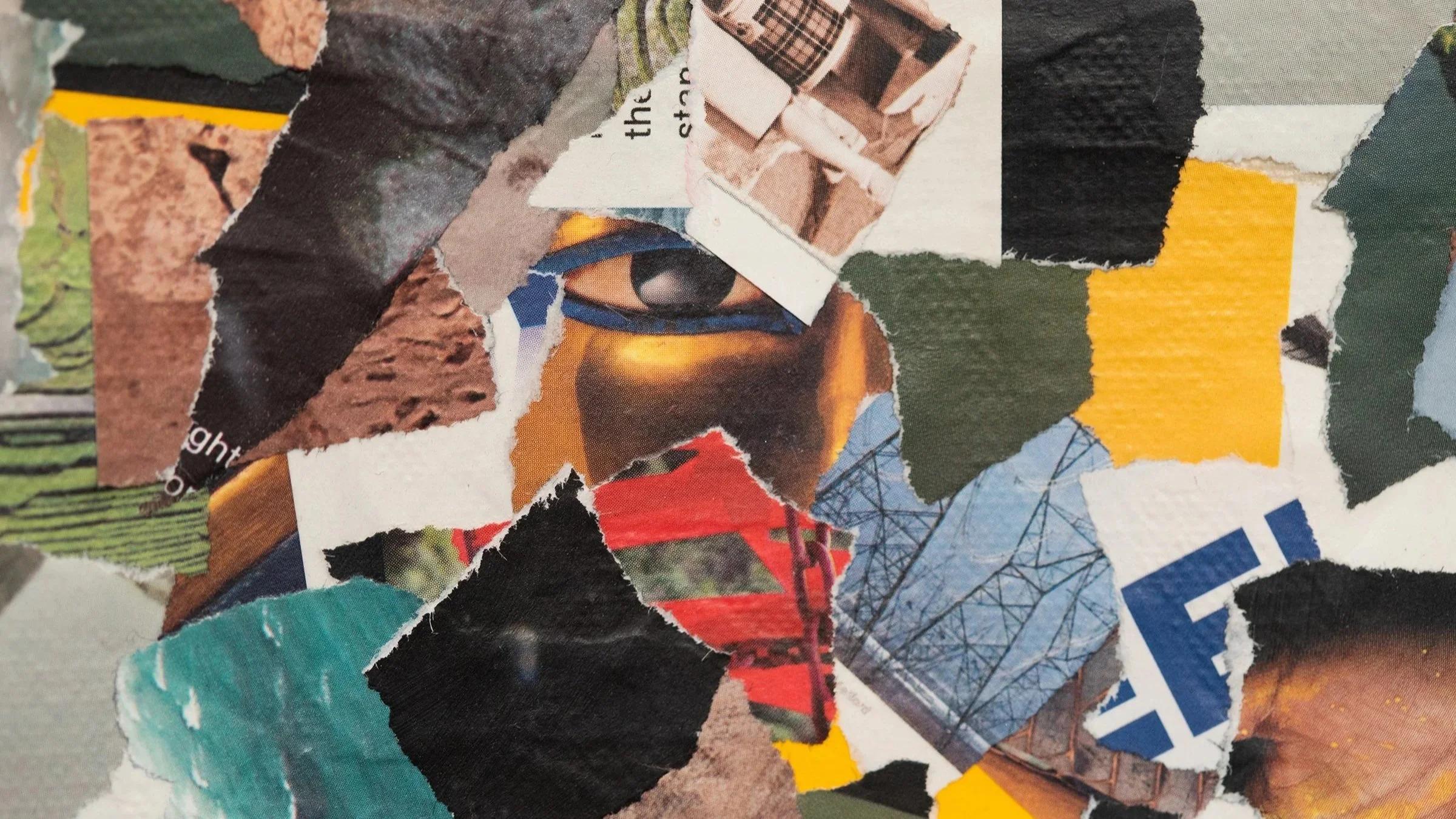
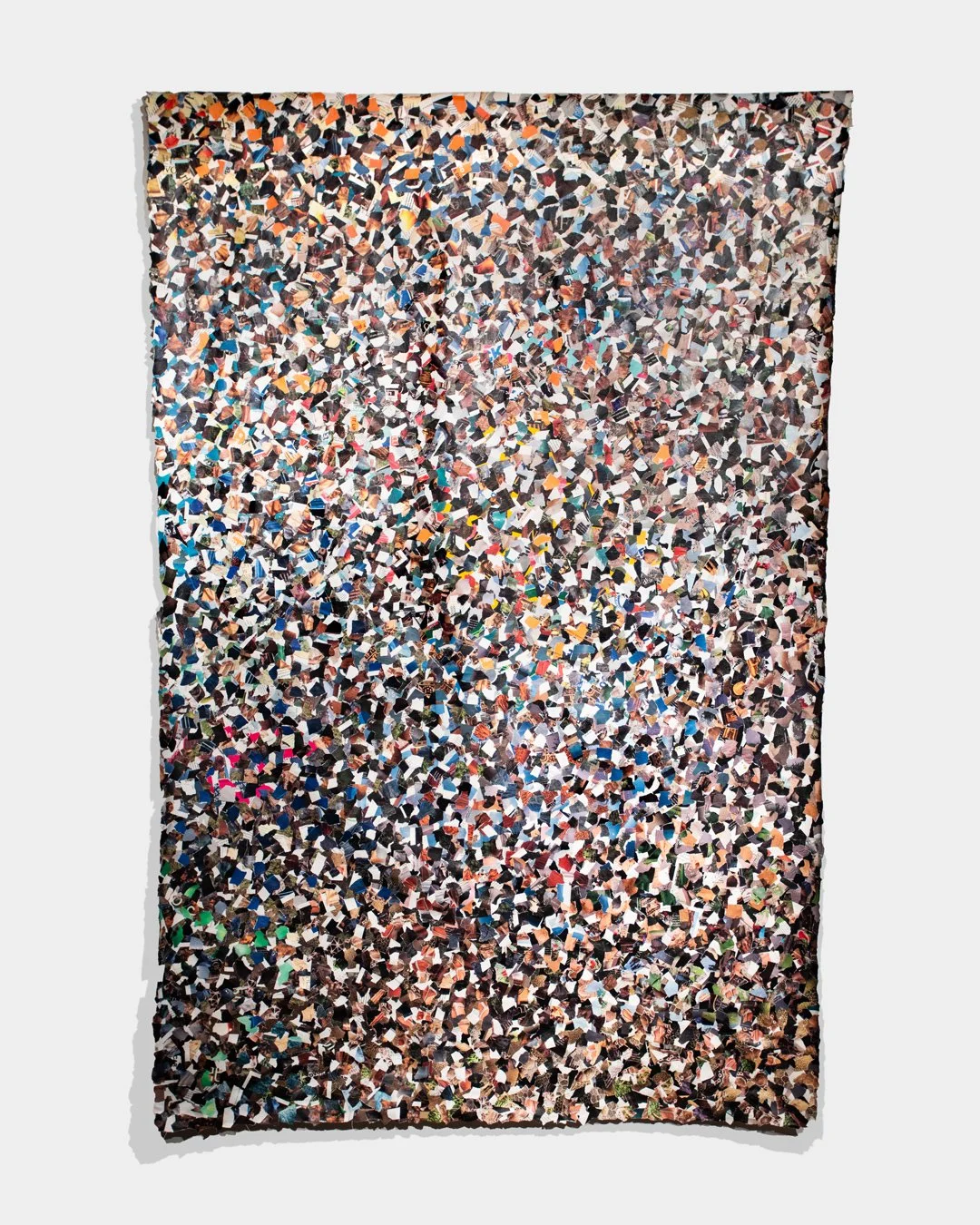
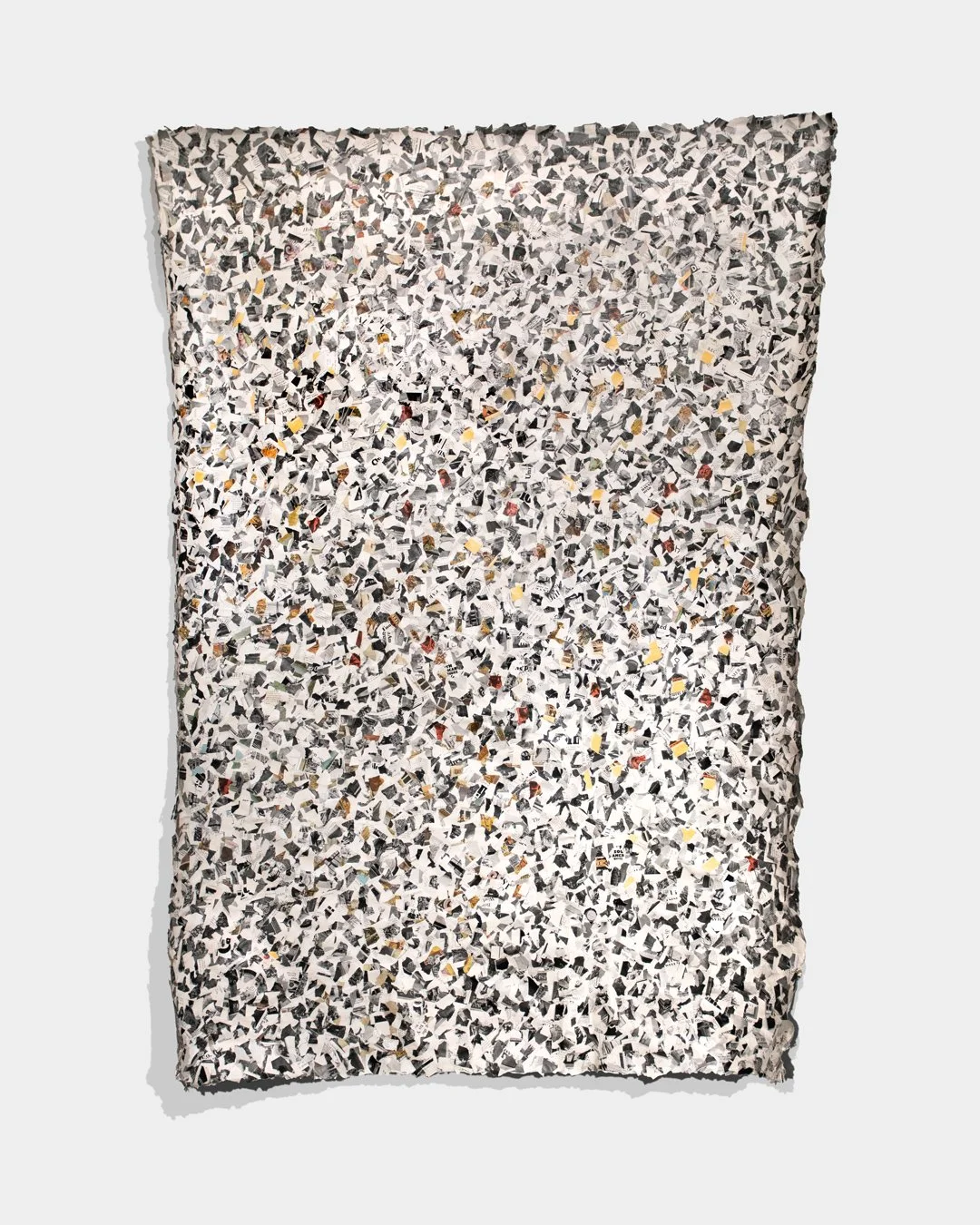
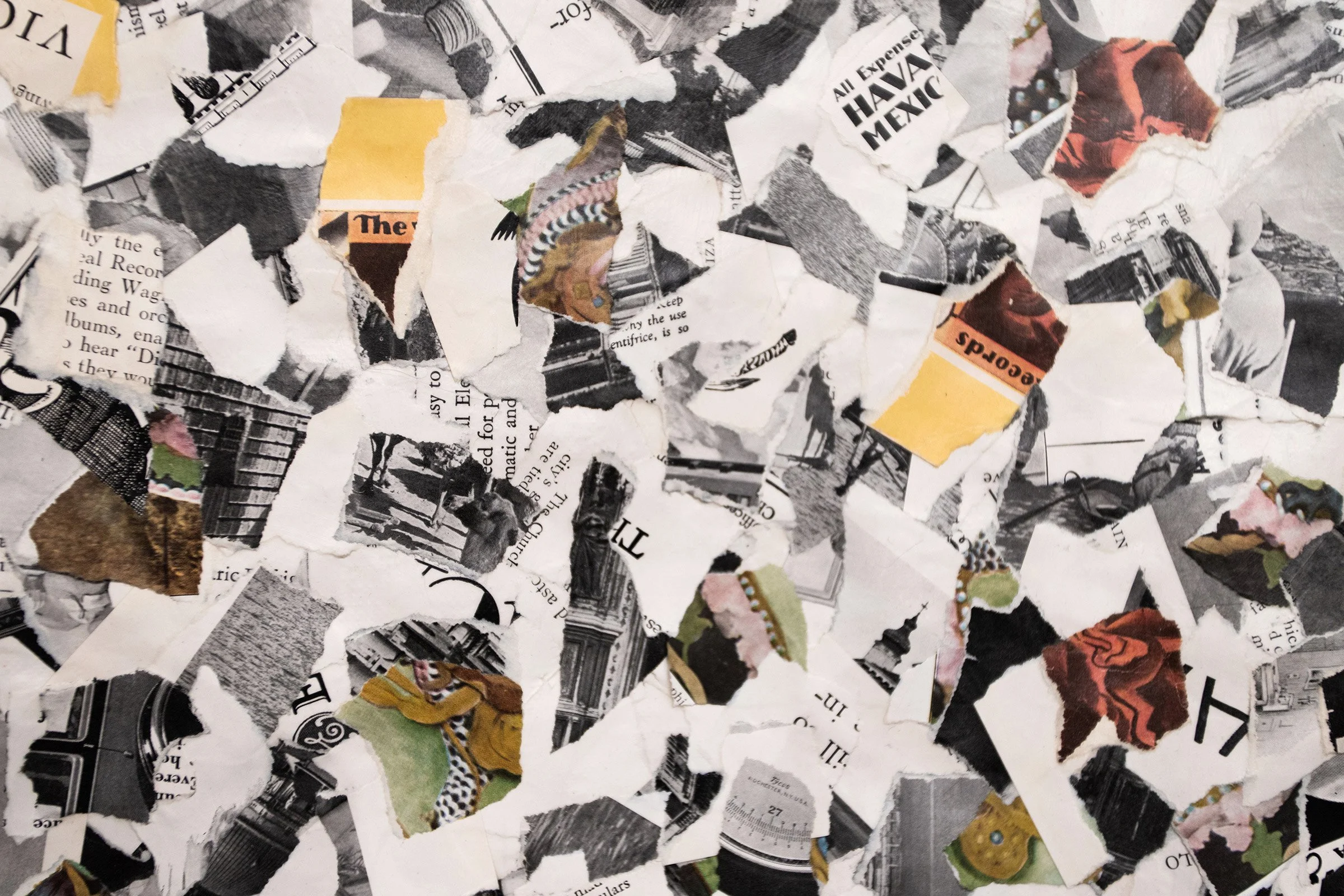
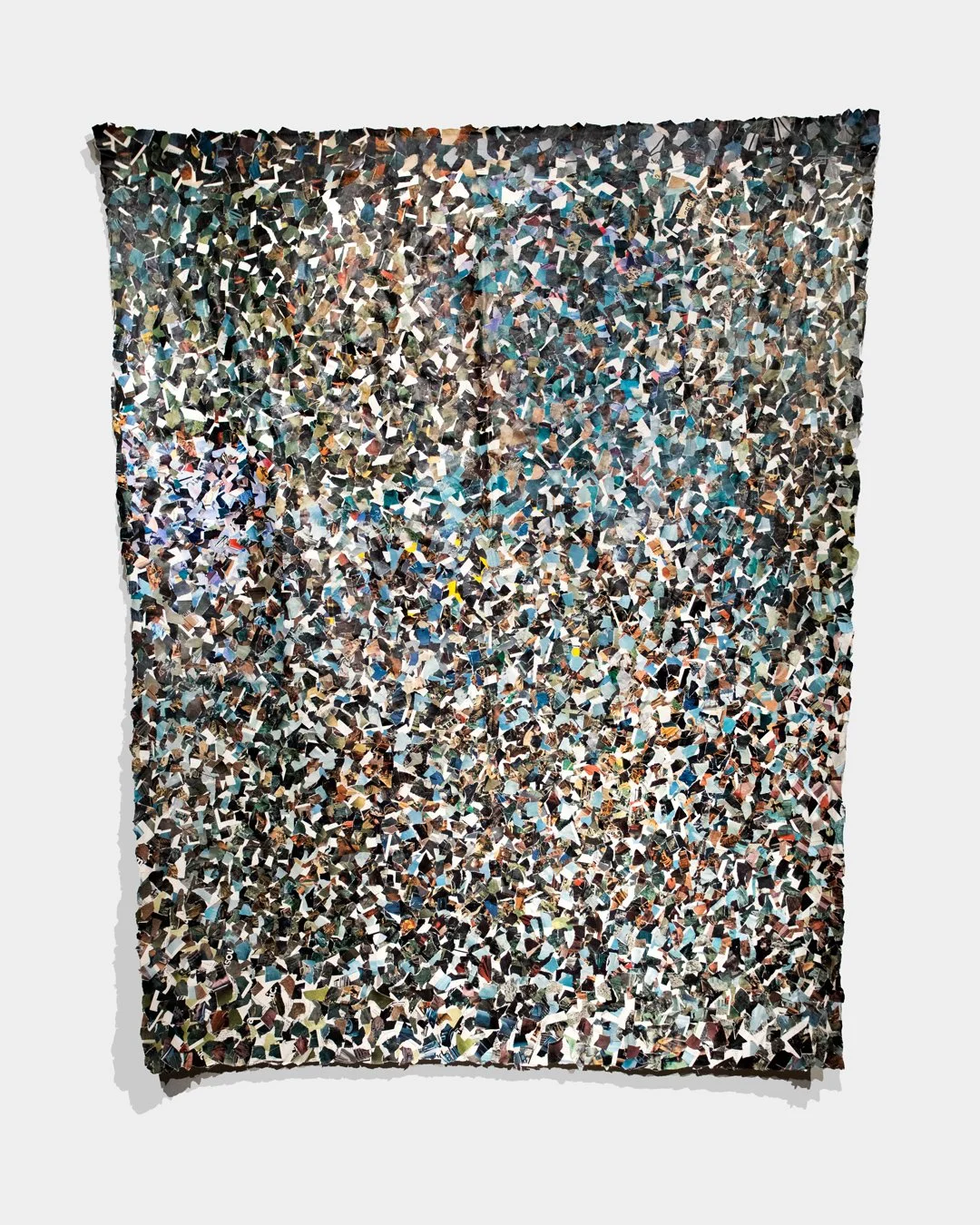
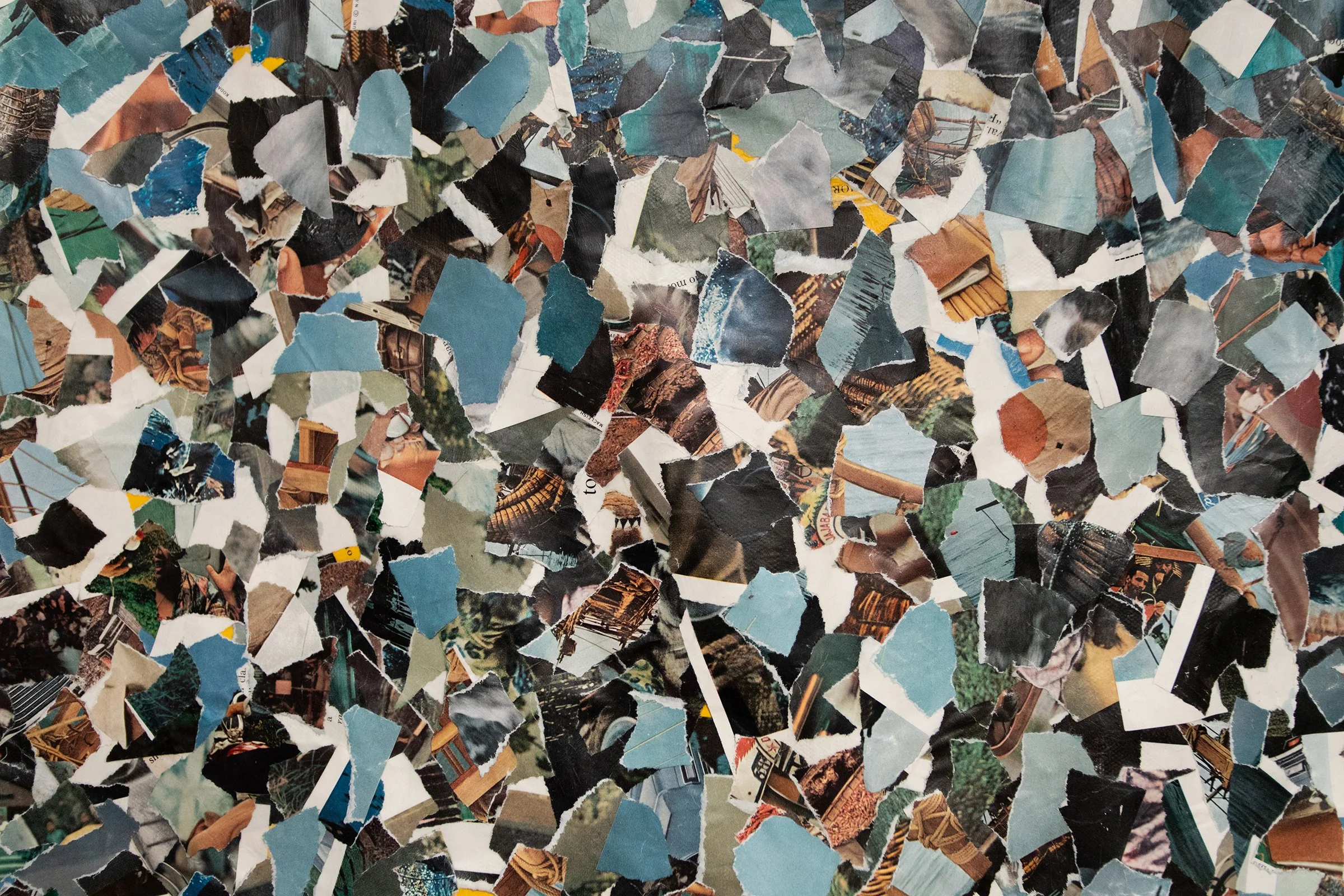
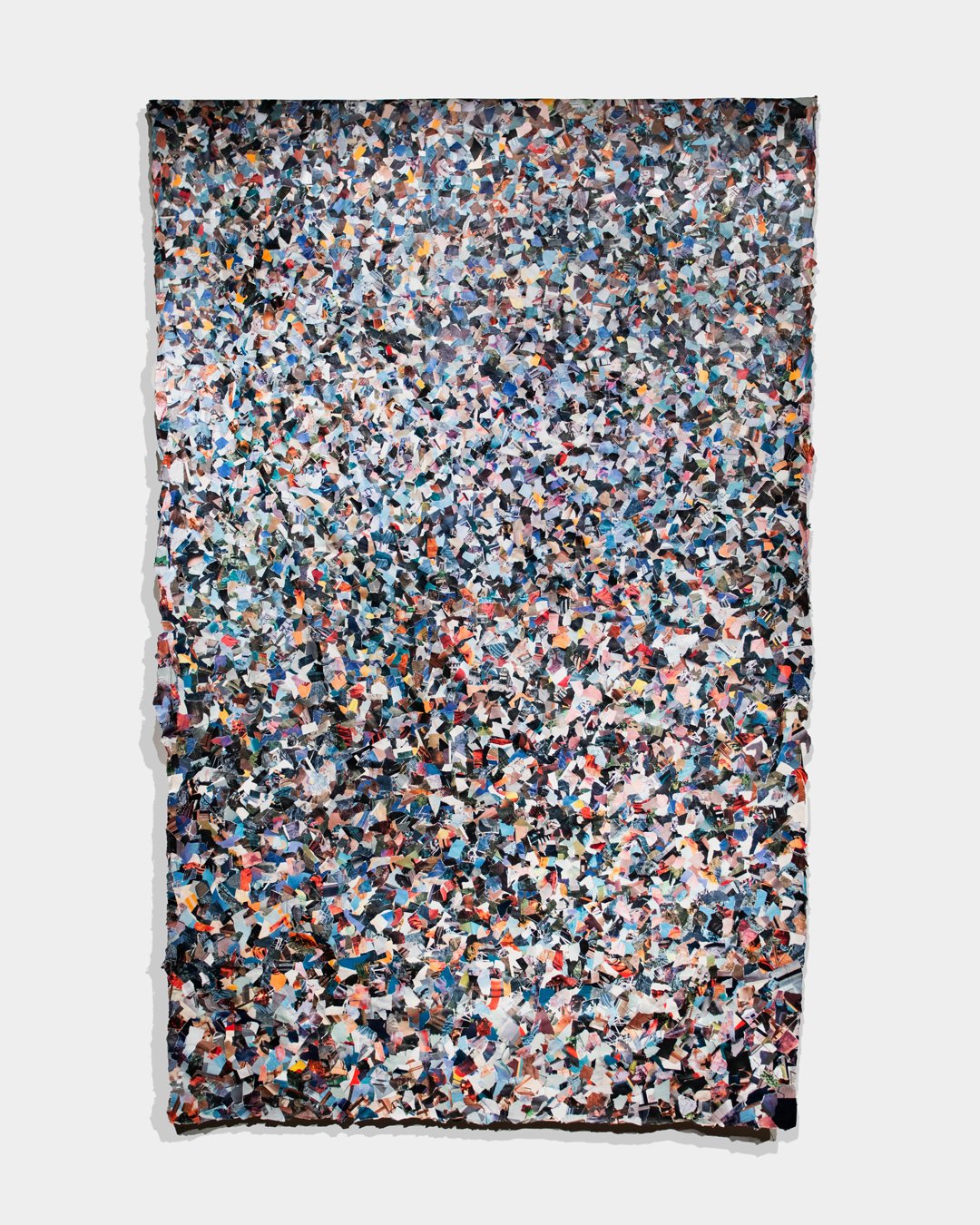
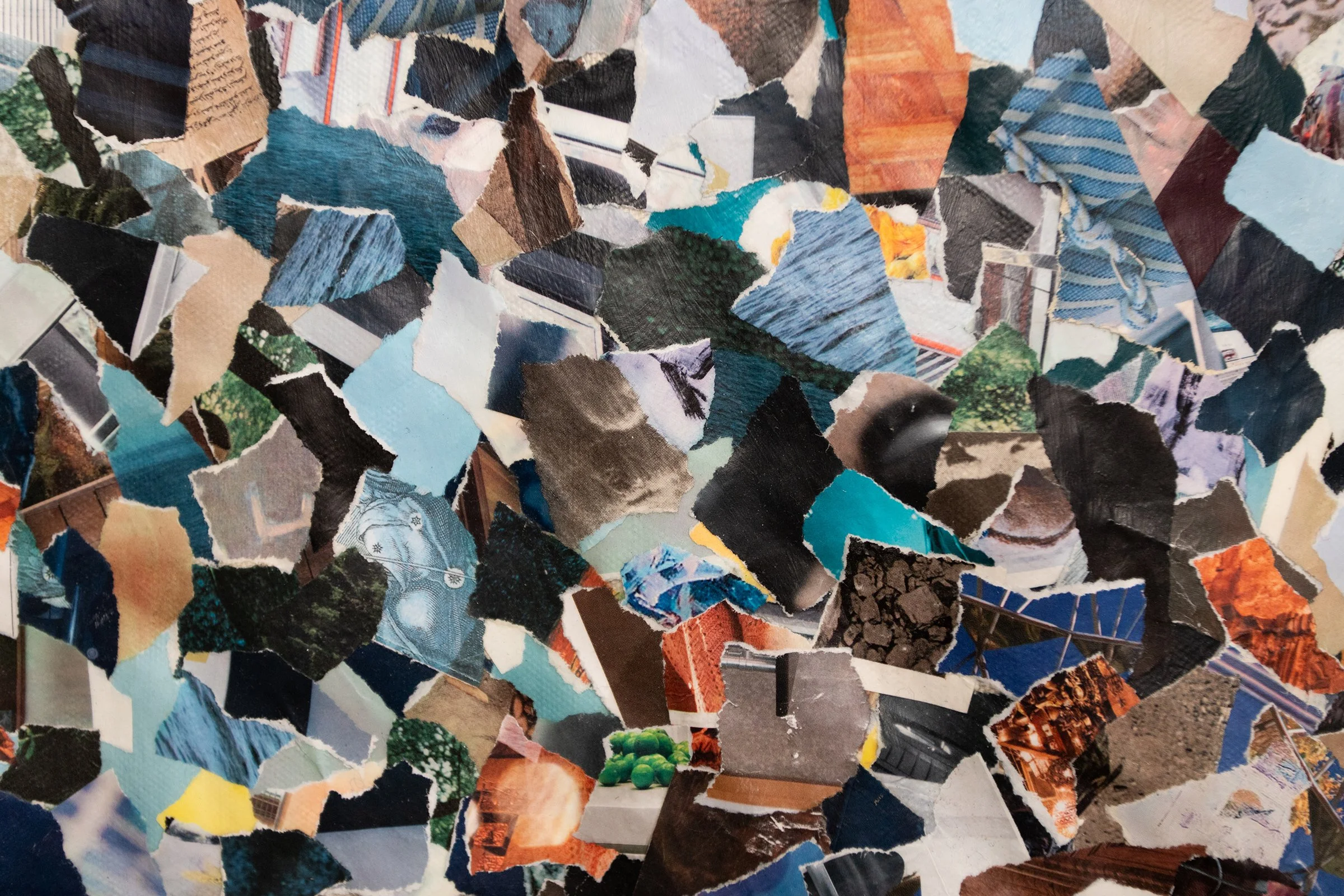
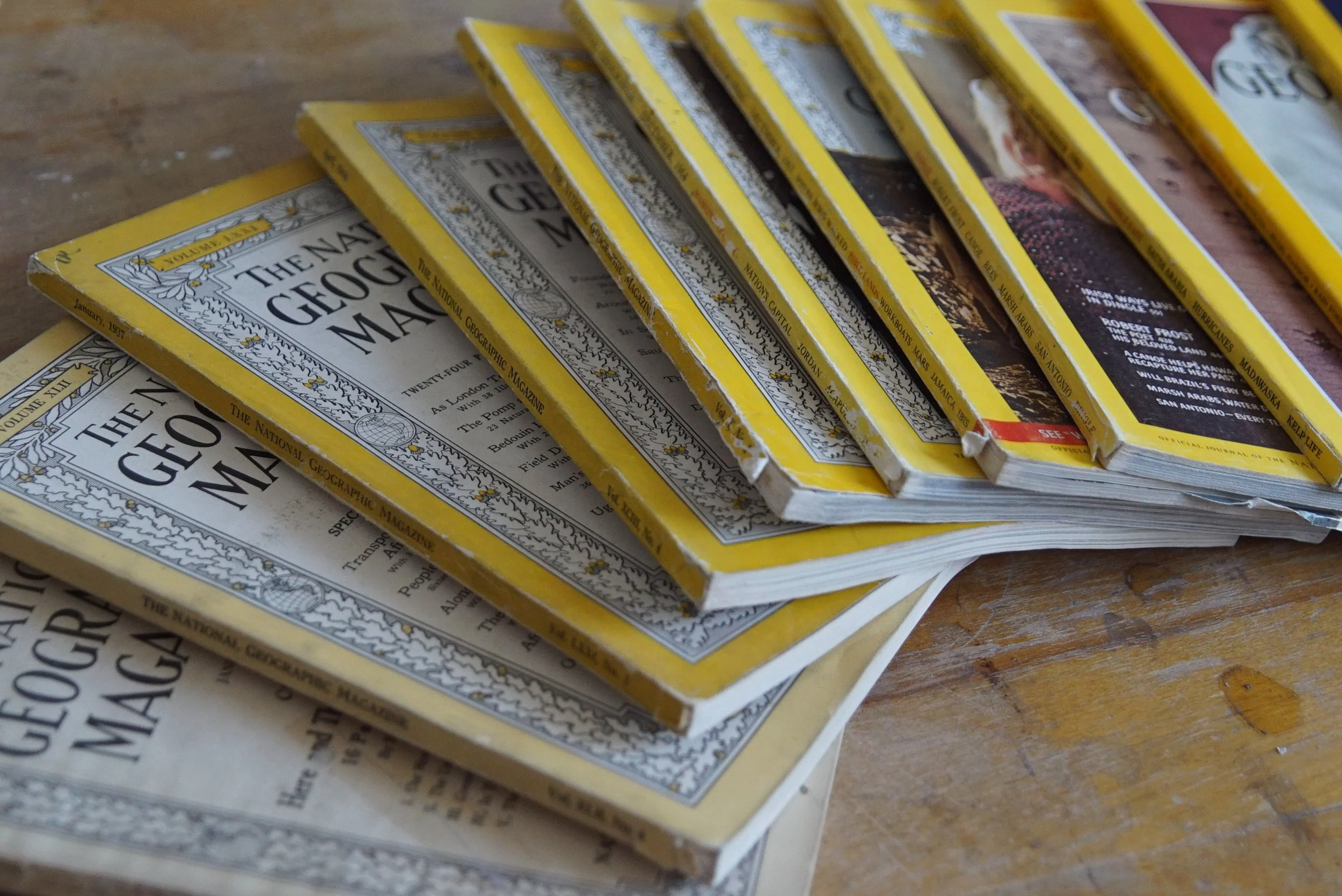
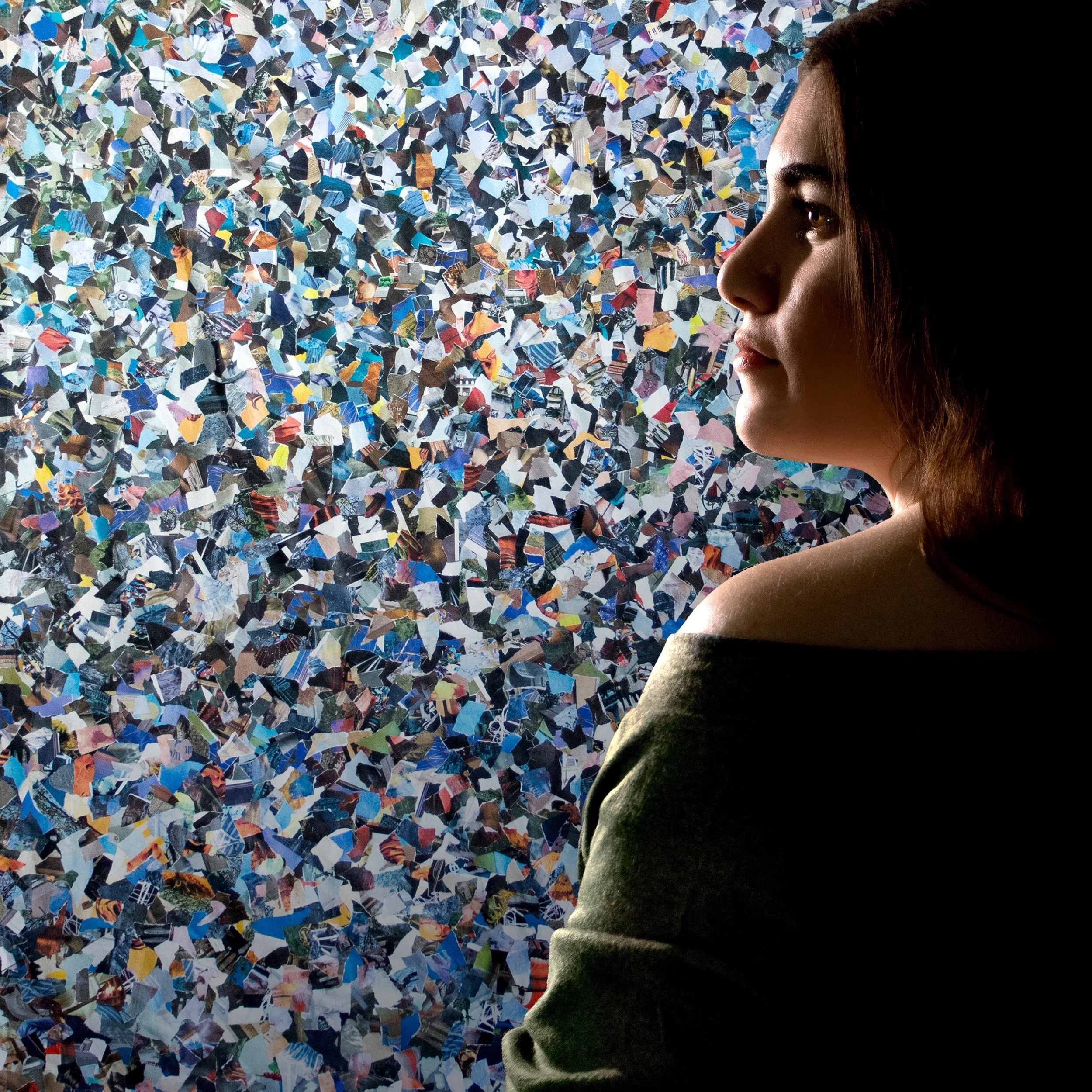
The Scheherazade Project features a series of large, abstract expressionist collages created entirely from National Geographic magazines focused on Southwest Asian/North African culture. Each collage is composed of one magazine, deconstructed and pieced back together into a densely detailed, mosaic-like memoryscape that captures Zizzo’s subconscious thoughts during creation. Various documentation and surveillance practices are conducted alongside this collage series, including in-progress photography of the canvas, archival scans of each corresponding magazine, kinematic detection of body movement, and more. This data is collected and analyzed with custom-built AI models hosted locally on Studio 203’s server, providing quantitative insight on Zizzo’s abstract expressionist-inspired creative process.
By recording certain external variables while Zizzo is working, such as her heart rate, the studio’s climate, the time of day she is working, what she is listening to while working, etc., alongside the chronological, in-progress photographs of each canvas, a correlative pattern emerges. The hope is that a more comprehensive data set with these heuristic data points will help train a custom AI model, Scheherazade AI, to deduce Zizzo’s subconscious decisions within each composition, offering insight into her creative process while also allowing the Scheherazade model to create its own work of art in a similar vein.
Named for the fictitious storyteller from A Thousand and One Nights, this arts-based research project incorporates various documentation and surveillance practices of aneesa shami zizzo’s abstract expressionist creative process in an effort to rewrite colonial perspectives of Southwest Asian/North African culture in U.S. visual media.
Objectives
Explore how AI can offer new perspectives on observing the creative process
Manipulate traditional visual data models into abstracted vehicles for information
Disrupt the predominantly Western paradigm in U.S. news sources
12 canvases
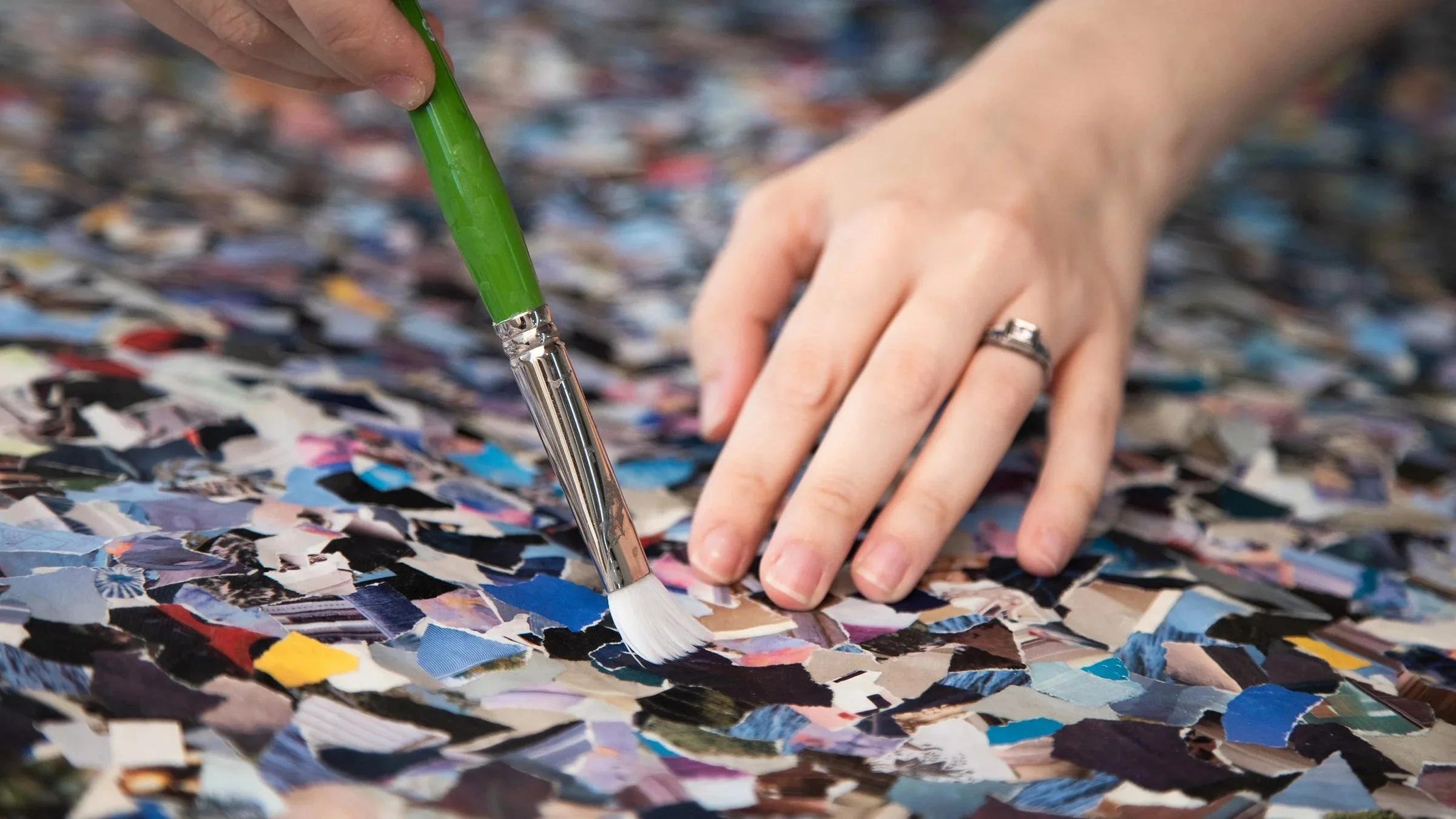
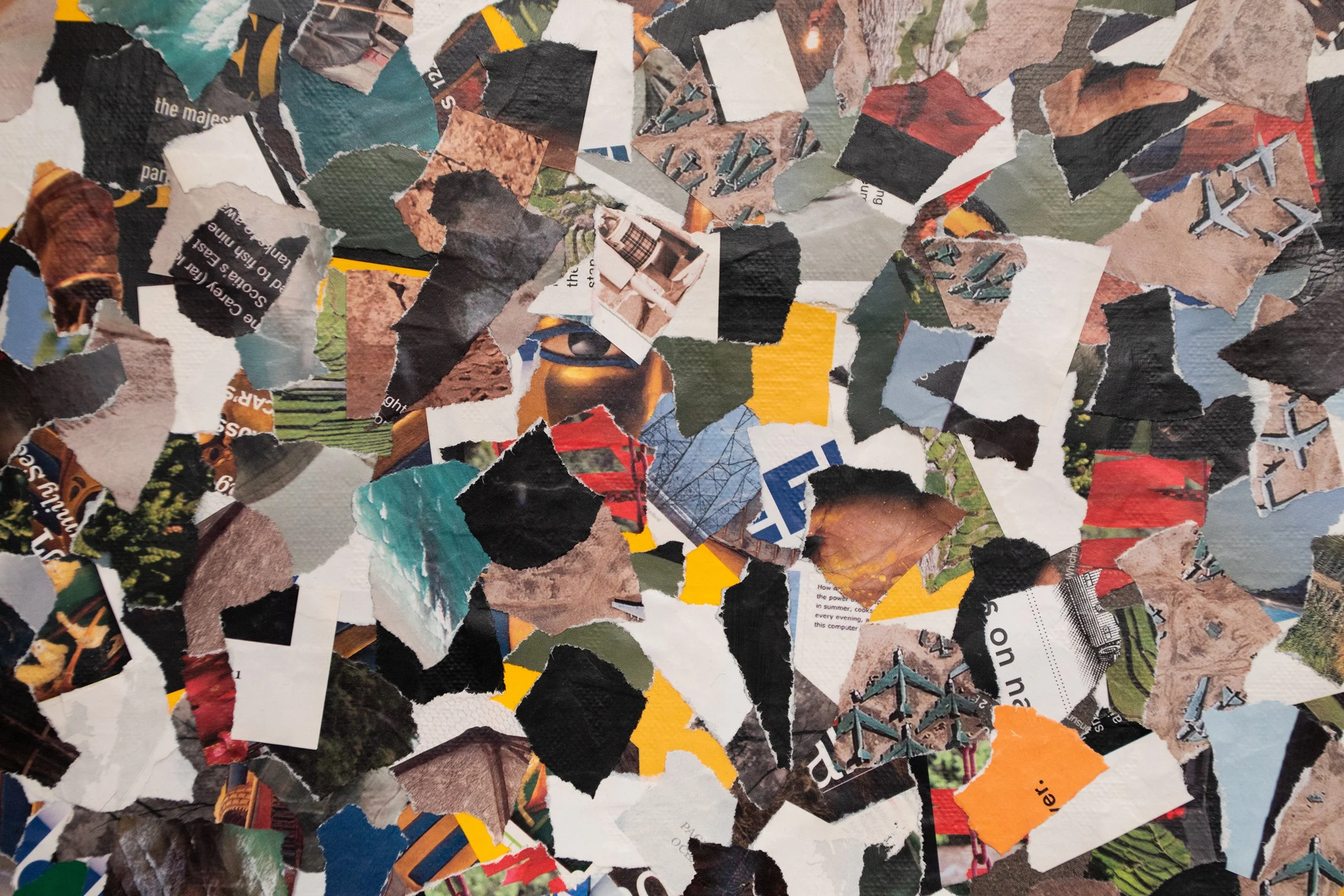
The project’s first culmination will feature a series of twelve canvases, abstracted depictions of every decade throughout National Geographic’s publication run. Using a widely syndicated and recognizable periodical as the source material for this project is a strategic move in visually dismantling the predominantly Western perspectives in the U.S. Each magazine is deconstructed and reassembled into a new narrative by employing abstract expressionism. Physically ripping each page into smaller pieces, Zizzo disrupts the magazine’s coded visual hierarchy, evaluating pages based on color and texture, rather than subject matter. By arranging each torn piece intuitively into an abstracted composition on the canvas, the National Geographic brand is obstructed, therefore erasing its visual connotations. This regurgitation of the magazine into an unrecognizable state deliberately blurs inherent discrimination in SWANA-related articles, offering a wordless version of the magazine’s content. The viewer’s first impression of the collage work is not one of education, but of enjoying harmonious movement synonymous with abstract expressionism and the sublime.
Assembled timelapse of September 2010 canvas featuring CV detected extractions of tesserae.
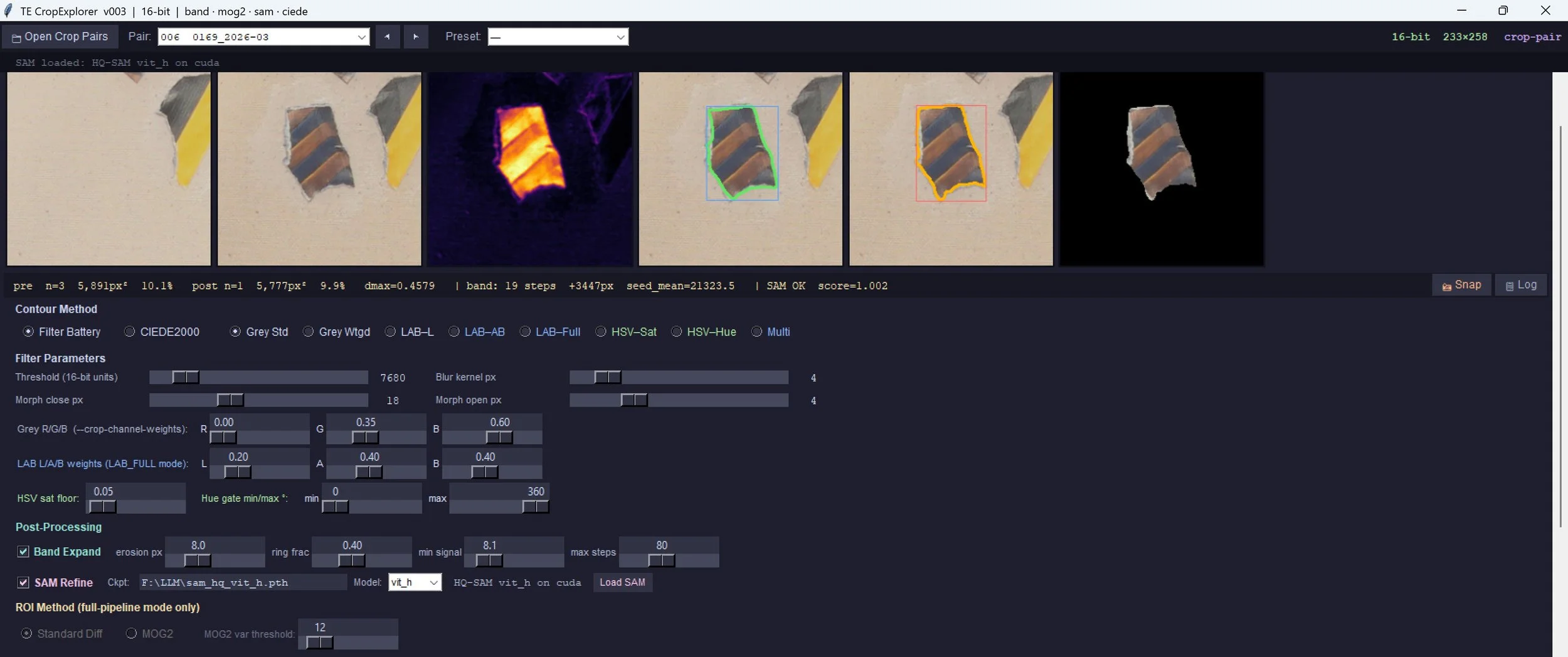
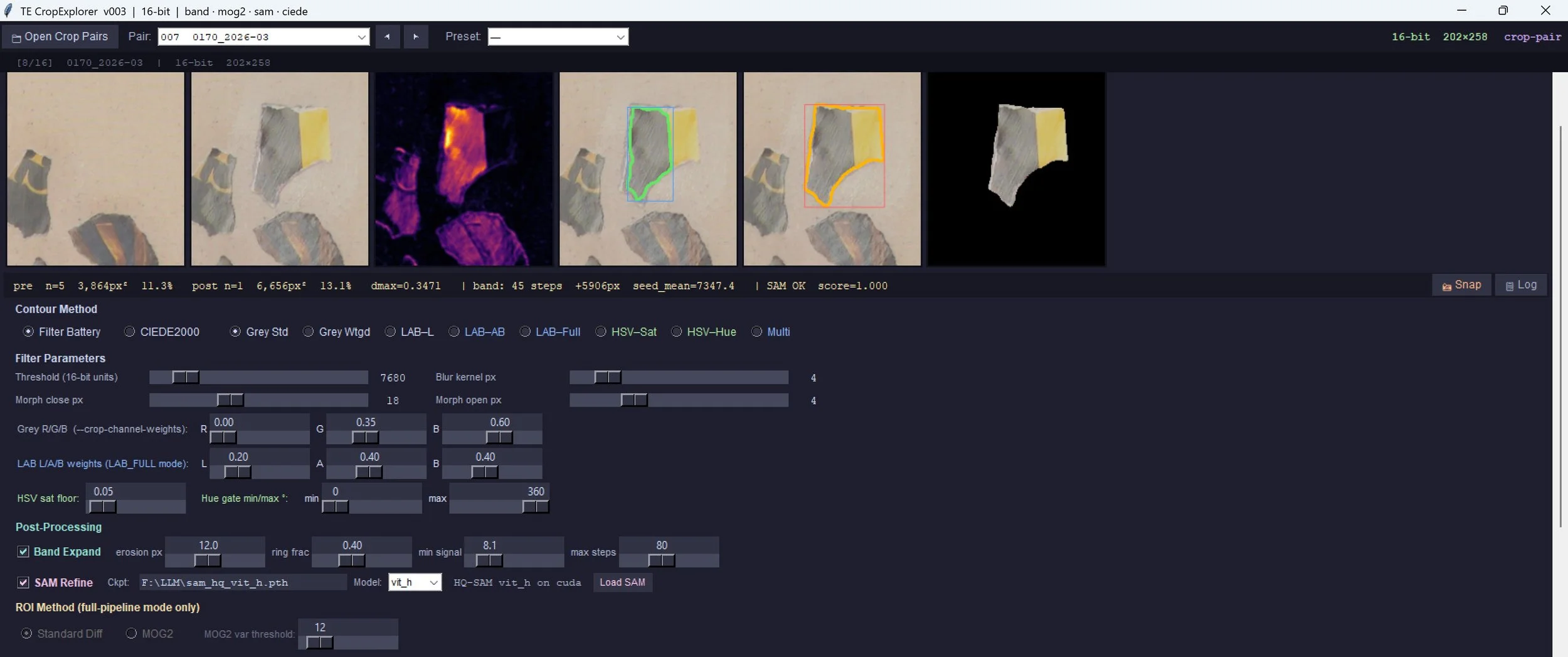
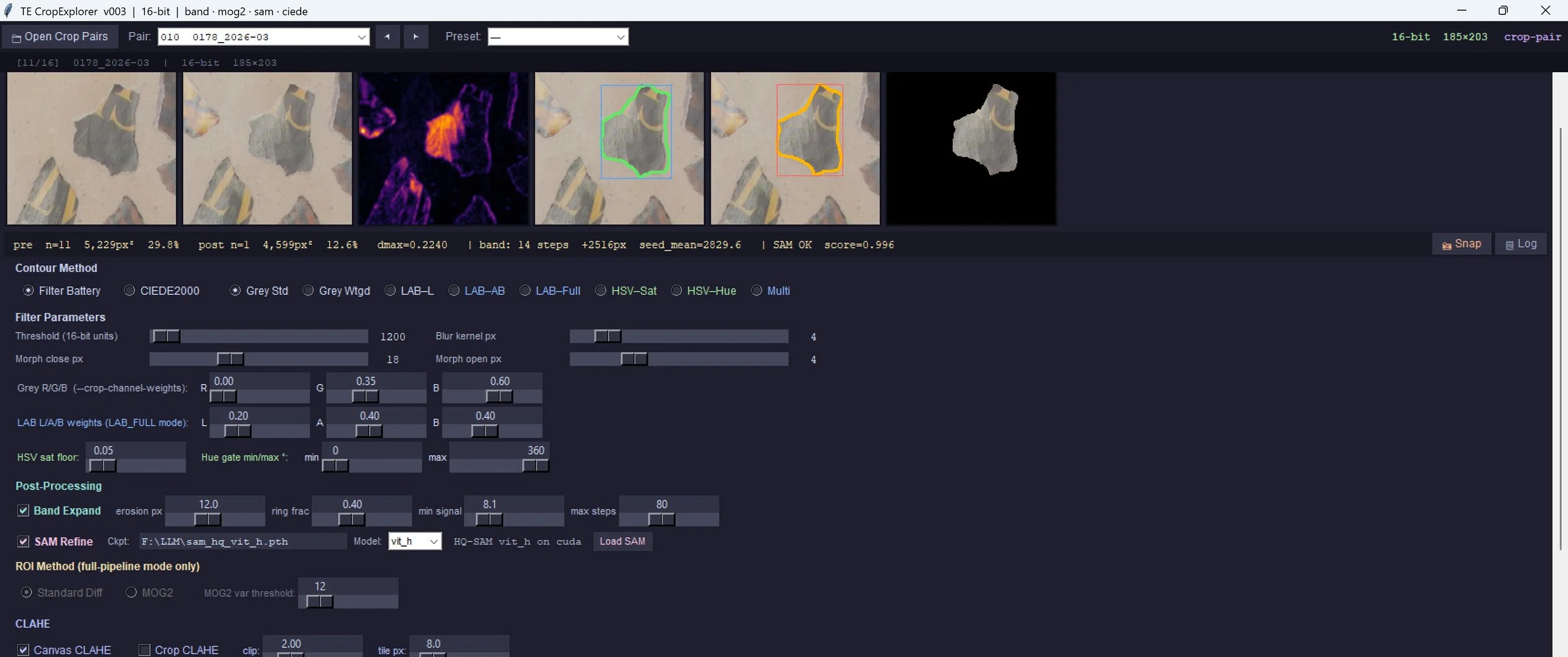
Computer Vision Explorer 3 screenshots featuring tesserae extraction process.
a note from the artist
My creative process for this project is extremely meticulous and requires sustained attention over long periods of time. A meditative state of mind occurs when working this way, providing mental space for me to explore personal feelings of diaspora while considering the source material’s subject matter. When coming across articles about SWANA culture, I note vocabulary choices and design selections that contribute to a perceived “otherness” inherent in the magazine. These observations affect my subconscious decisions while creating each composition, and when combined with my personal history, experiences and understanding of formal design elements, the artwork offers a unique retelling of the magazine’s content.
By photographing each addition to the canvas, piece by piece, and assembling the documentation chronologically into a timelapse, I am able to capture my in-process meditation results almost in real time. When viewing the completed artworks alongside the documented progress photos, one is able to perceive my internalization of information while wrestling with the orientalism implicit in my own upbringing and education. This offers viewers an abstracted way to reclaim their own fractured truths about SWANA culture.
With the ongoing violence instigated by Israel and the U.S. in the SWANA region
Using AI to uncover more information about these decisions
Use of AI in daily life is on the rise, with the worry that it will take over creative jobs and replace human artists by exploiting their work
Fake news has been on the rise as well, with confusing messages and unclear provenances for certain media, causing further dissonance with collective memory and cognition
Ongoing violence instigated by Israel and the US in SWANA region is still making headlines, still feeding this dissonance
Ethical use of AI is not seen as a priority in public arena, it is vital to our environment and society to be conscientious of use of resources
— Aneesa Shami Zizzo
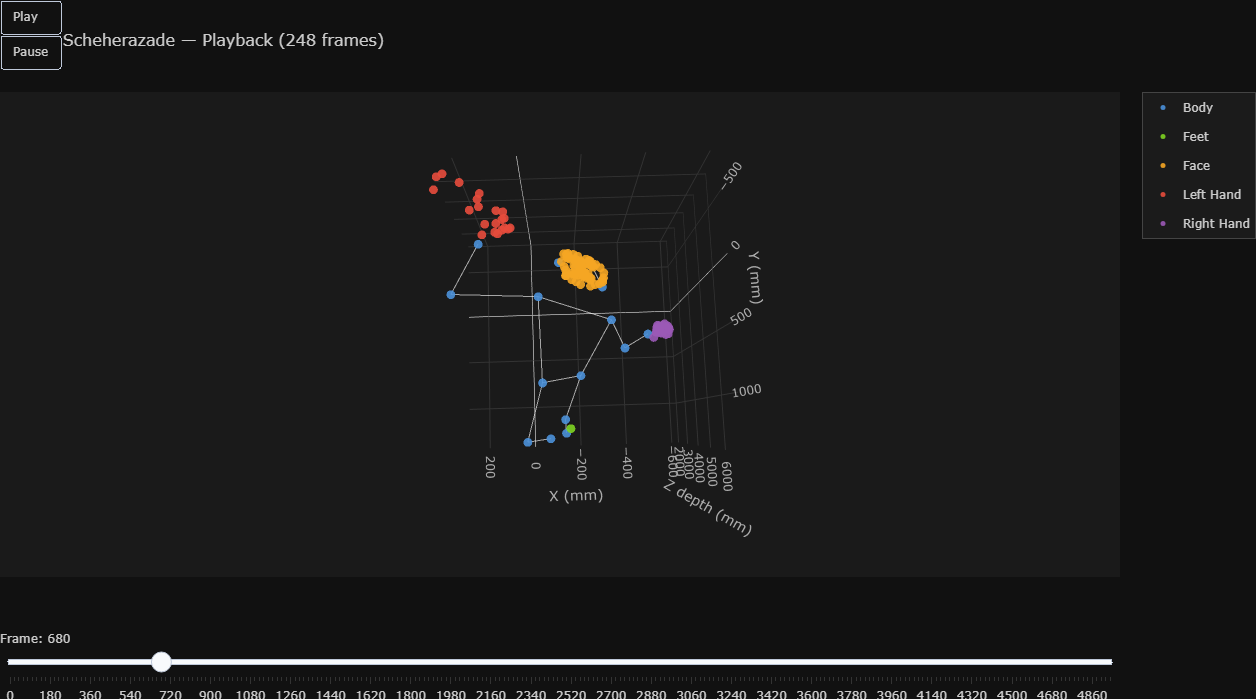
Surveillance video of process with kinematic detection overlay.
a note from the engineer
The Scheherazade Project asks three questions:
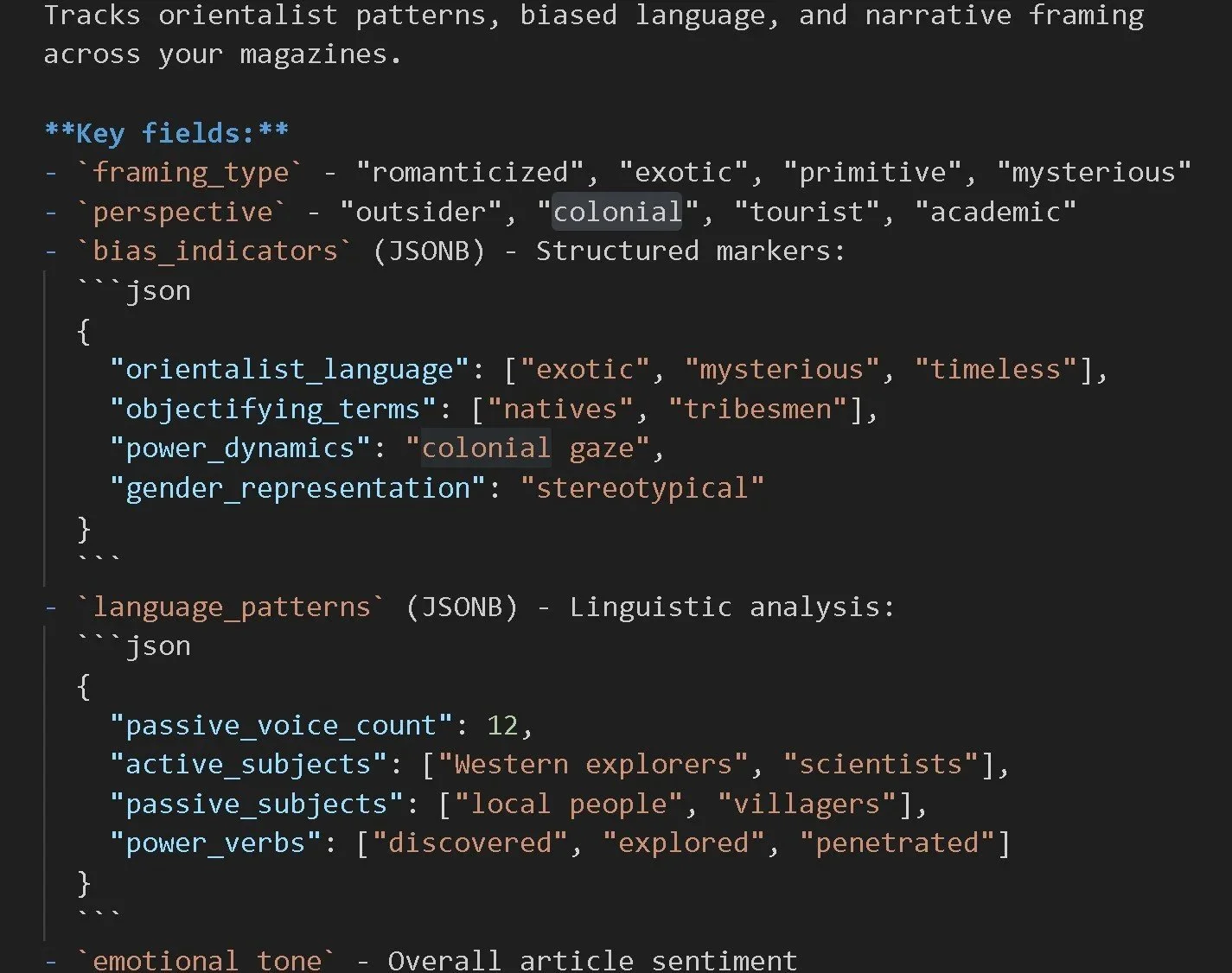
Can machines reliably identify and catalogue narrative bias in visual media? Specifically, can computer vision and AI detect patterns of orientalism across a century of National Geographic coverage?
Can objective data capture subjective creative process? When a trained artist creates abstract expressionist collage, work that succeeds when an audience finds it "sublime,” can we catalogue the subconscious decisions from environmental and compositional data, then train a vision-language model to reproduce that process?
Can we extract relational meaning from creative choices? From the data collected in both pursuits, can we find correlations between the actual collaged content and the artist's subconscious process—proving (or disproving) that creative intuition follows measurable patterns?
about